
Why Restorative Yoga Is the Hardest Practice You'll Ever Do

If you've ever looked at a restorative yoga class and thought, "That doesn't look very challenging."
You're not alone.
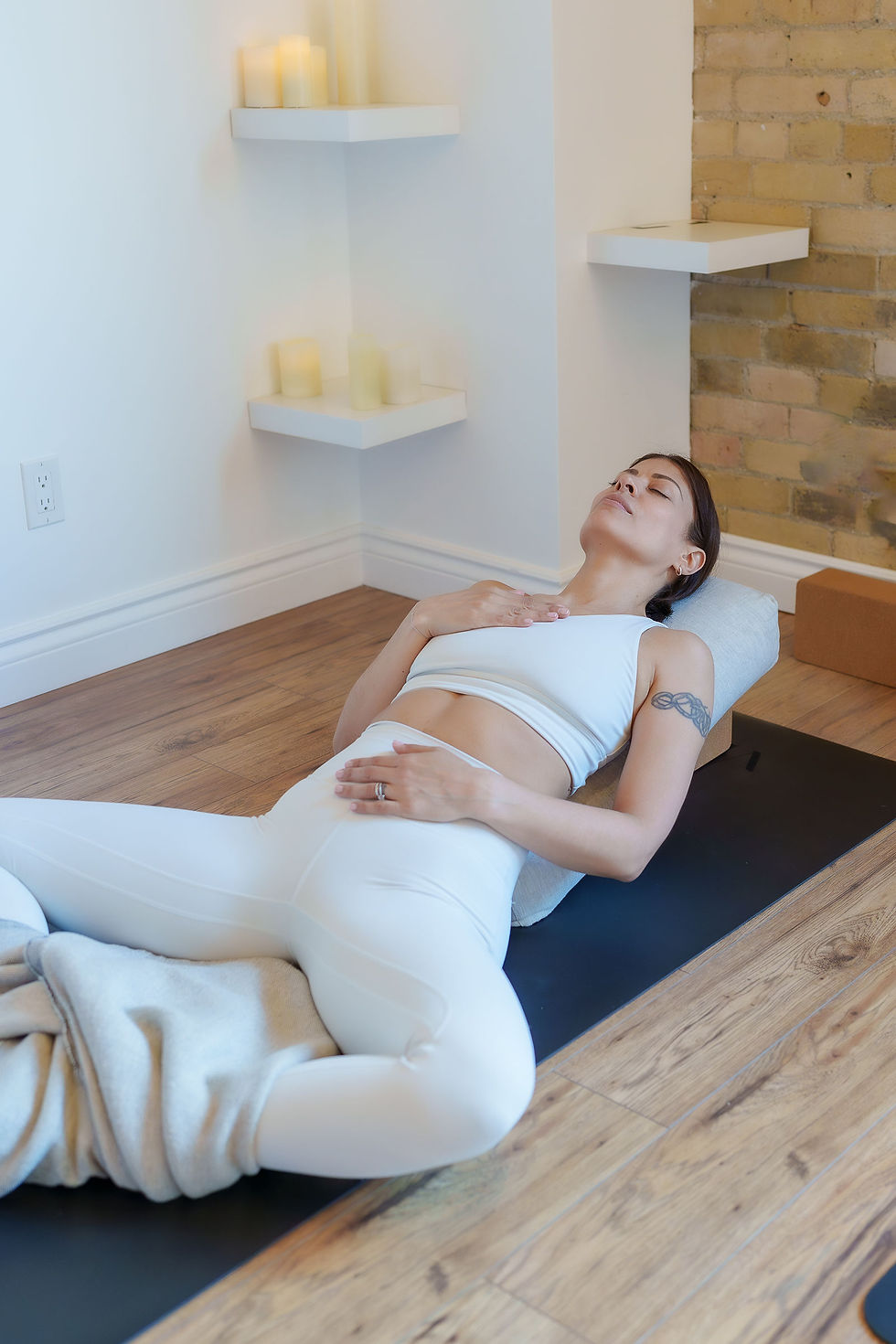
After all, you're surrounded by blankets.
Bolsters cradle your body.
The lights are dim.
There are no handstands.
No sweaty vinyasas.
No impressive arm balances.
From the outside, it looks like the easiest class in the studio.
Until you try it.
Because somewhere between the silence and the stillness, you discover something unexpected.
You can't stop thinking.
Suddenly your grocery list appears.
That email you forgot to send.
The conversation you keep replaying.
Tomorrow's schedule.
The dishes waiting at home.
Your nervous system, which has been running quietly in the background all day, suddenly becomes impossible to ignore.
And that's exactly why restorative yoga is one of the most challenging practices you'll ever encounter.
We Have Forgotten How to Rest
We live in a culture that celebrates productivity.
Busy has become a badge of honour.
We're praised for doing more.
Working harder.
Checking one more thing off the list.
Even our workouts often become another task to accomplish.
We count calories burned.
Track heart rates.
Celebrate soreness.
Somewhere along the way, we began believing that rest must be earned.
That slowing down is lazy.
That stillness is wasted time.
Yoga offers a different perspective.
Sometimes the most productive thing you can do is absolutely nothing.
Stillness Isn't Passive
Restorative yoga isn't about doing less.
It's about allowing your body the opportunity to do what it has been trying to do all along.
Heal.
Recover.
Regulate.
When your body feels safe, your breath softens.
Your heart rate slows.
Your muscles release unnecessary tension.
Your nervous system begins shifting away from survival and toward restoration.
This isn't weakness.
It's biology.
The Nervous System Is Always Listening
Many of us spend our days in a constant state of alert.
Emails.
Traffic.
Notifications.
Deadlines.
Even joyful responsibilities can keep the body in a low-level stress response.
We become so accustomed to this state that it starts to feel normal.
Then we lie down on a bolster...
...and our mind races even faster.
Not because restorative yoga isn't working.
Because it is.
For the first time all day, you've created enough quiet to notice what's been there all along.
Awareness always comes before change.
The Practice Is Learning to Stay
The first instinct is often to move.
Adjust the blanket.
Scratch an itch.
Check the clock.
Reach for your phone.
Anything but simply remain.
Restorative yoga gently asks: Can you stay?
Can you stay with the breath?
Can you stay with discomfort without immediately trying to fix it?
Can you allow your body to soften in its own time?
This isn't about forcing relaxation.
It's about creating the conditions where relaxation becomes possible.
Rest Is a Skill
We often treat rest as something that simply happens.
But like strength, balance, or flexibility...
Rest is something we practice.
The more often we create space for stillness, the more familiar safety becomes to our nervous system.
The more we learn to recognize tension before it becomes pain.
The more resilient we become—not because we push harder, but because we recover more completely.
Why This Matters Off the Mat
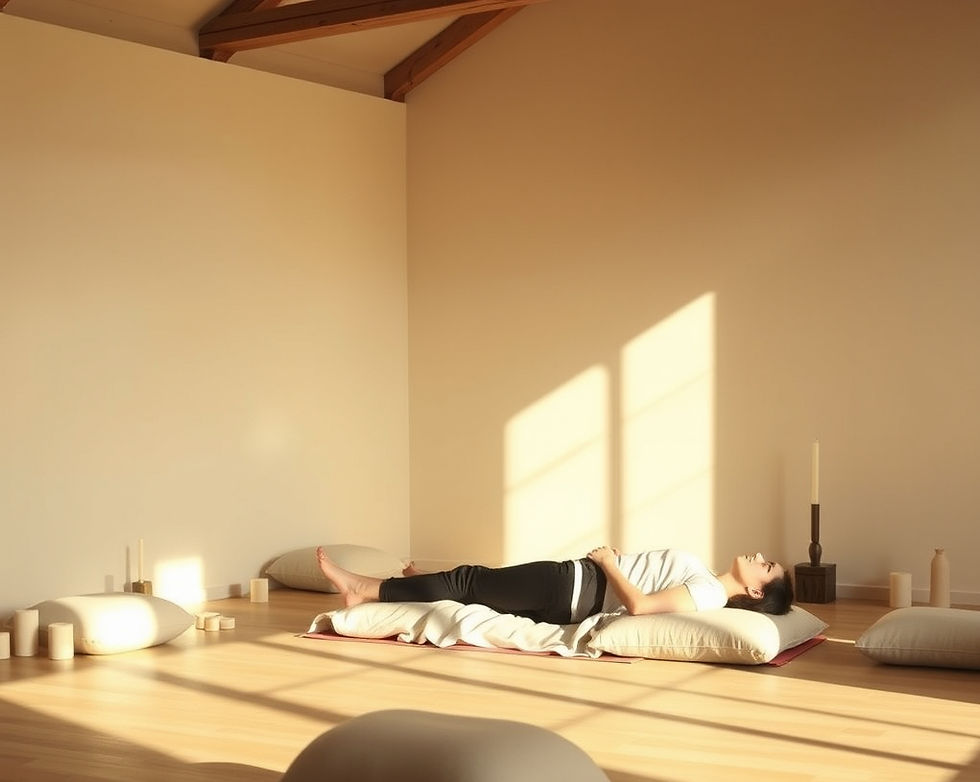
Restorative yoga teaches us something that extends far beyond the studio.
It reminds us that our worth isn't measured by our productivity.
That slowing down isn't falling behind.
That presence is more valuable than perfection.
When we learn to rest intentionally, we become more patient.
More compassionate.
More present with ourselves and with others.
We don't simply become better at yoga.
We become better at living.
The Quietest Practice Often Creates the Greatest Transformation
The deepest shifts rarely happen in the most dramatic moments.
They happen quietly.
One breath.
One pause.
One moment of choosing to stay instead of rushing on.
Restorative yoga doesn't ask you to become someone new.
It invites you to return to the person who has been there all along—beneath the noise, beneath the tension, beneath the constant doing.
Sometimes the hardest practice isn't learning how to stand on your hands.
Sometimes it's learning how to rest in your own presence.
And perhaps that is where the real healing begins.
An Invitation
If you've never experienced restorative yoga, I encourage you to approach it with curiosity rather than expectation.
You may discover that the practice asking the least of your body is the one that offers the most to your heart.
At Moontara, restorative yoga isn't an afterthought—it's a cornerstone of how we teach. We believe every yoga teacher should understand not only how to guide movement, but also how to create spaces where people feel safe enough to truly rest.
Because sometimes the most powerful thing we can offer isn't another pose.
It's permission to pause.


Comments